






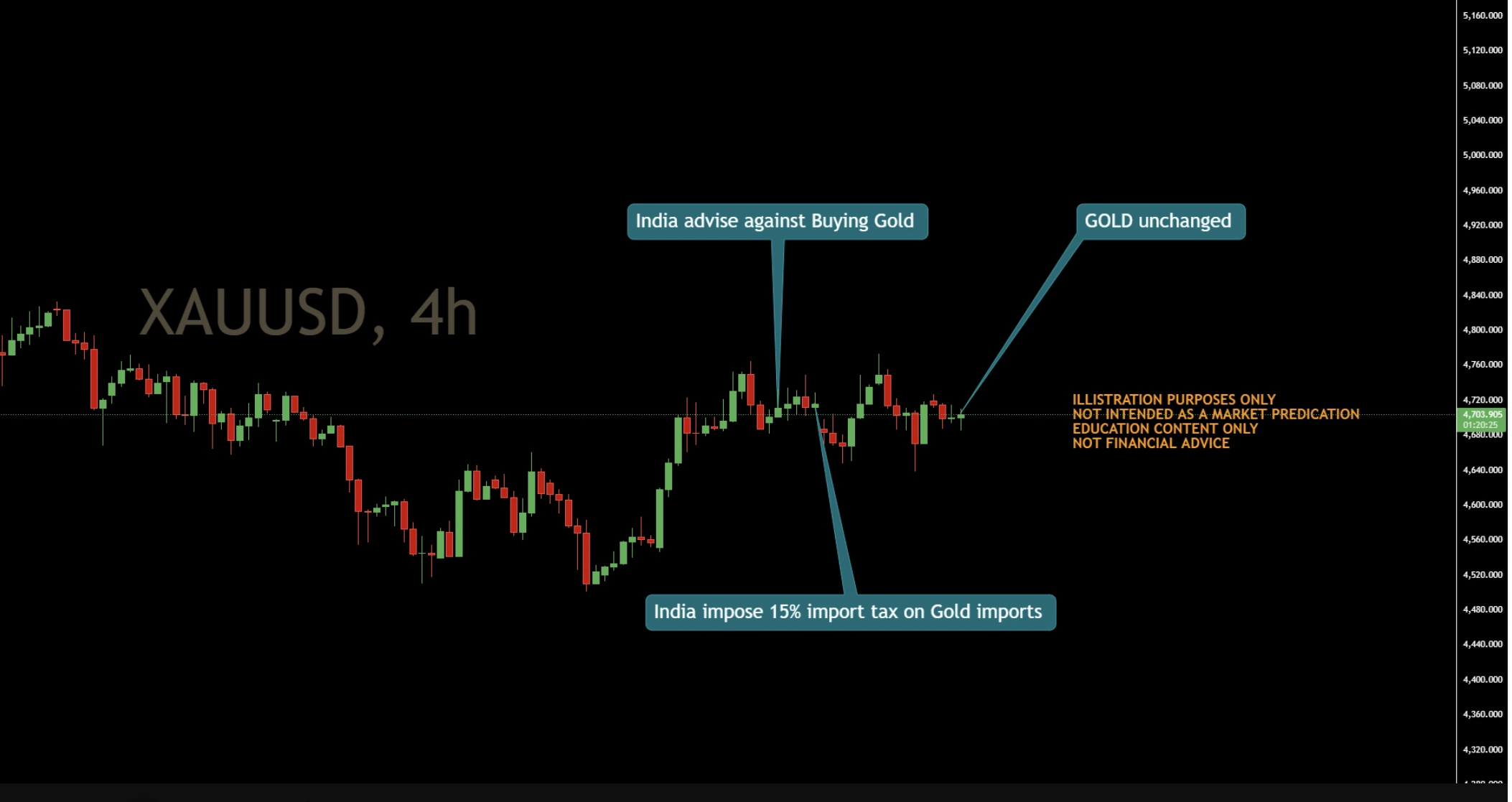
Why did Modi ask Indian citizens to stop buying gold?
By Andrew Lockwood, Head of Trader Education
On May 10, 2026, Indian Prime Minister Narendra Modi urged citizens to delay gold purchases for a year to protect India’s foreign-exchange reserves and the rupee. Because India imports massive amounts of gold, reducing this demand helps lower the country’s US dollar import bill during a period of rising global energy costs.
Gold has always had a special place in India; it is a store of wealth, a wedding tradition, and a form of financial security. So when the leader of the world’s second-largest gold market asks citizens to stop buying, the global market pays attention.
For prop traders managing a simulated funded account, the question is simple: does this macroeconomic shock mean you should blindly short XAUUSD, or should you ignore the headlines and stick to your technical edge? Here is a breakdown of what is actually happening in the gold market and exactly how disciplined prop traders should handle it.
Why Does India Want People to Buy Less Gold?
The issue is not that the Indian government dislikes gold. The issue is that India imports almost all of the gold it consumes.
India reportedly imported around $72 billion of gold in FY26, accounting for nearly 10% of the country’s total import bill. When Indian households buy gold, India must send US dollars overseas to pay for it. This creates massive pressure on the rupee, especially now, as India is already facing higher oil prices and external shocks linked to the Iran conflict.
In simple economic terms: More gold imports = more demand for US dollars = more pressure on the rupee.
To enforce this, just two days after Modi’s appeal, India raised import tariffs on gold and silver from 6% to 15%. The goal is clear: make imported gold more expensive, discourage new imports, and protect the currency.
What Impact Will This Have on the Gold Market?
To help traders understand the fallout, we must separate the immediate local reaction from the broader global trend.
| Market Timeline | Expected Impact on Gold |
| Short-Term (Domestic) | Highly Disruptive. The 15% tariff hike immediately made landed gold more expensive in India. Indian gold futures jumped 7.2% on May 13, 2026, and jewellery stocks fell. We expect to see higher local premiums, increased recycling of old gold, and potentially a revival in smuggling. |
| Long-Term (Global) | Limited Impact. Unless Indian consumer behaviour changes permanently, global XAUUSD trends will remain intact. Gold is culturally ingrained in India. While some may delay non-essential purchases, global gold prices are ultimately driven by bigger macroeconomic forces. |
Should Prop Traders Trade This News or Stick to Their Strategy?
When massive news hits the wires, amateur traders try to predict the outcome. Professional prop traders do not.
If you read the headline “India stops buying gold” and immediately enter a massive short position on XAUUSD, you are speculating. Global gold prices are not driven by Indian jewellery demand alone. They are driven by US interest-rate expectations, real yields, US dollar strength, central-bank buying, and geopolitical risk.
At the exact same time Modi is asking Indians to buy less gold due to macroeconomic stress, global investors are buying gold as a safe-haven asset for the exact same reasons.
If you are trading in a simulated prop firm environment, you must stick to your strategy. Do not abandon your rules to trade a fundamental headline.
Here is how you should handle this information:
- Use News for Context, Not Entries: This news tells us that XAUUSD will likely experience heightened volatility. Use this context to tighten your risk management, not to blindly pick a direction.
- Stick to Market Structure: The institutions that drive the price of gold leave clear technical footprints on the chart. Wait for price to confirm direction through setups like the Fair Value Gap (FVG) or the Anchored VWAP strategy.
- Respect Your Drawdown Limits: Trading fundamental news without a technical stop-loss is the fastest way to breach your daily simulated loss limit. Whether you are using a Turtle Trading Breakout or fading a false move with Turtle Soup, wait for the setup to form, establish your risk in pips, and execute mechanically.
The message is simple: India’s move could cool one major source of physical demand, but the global gold price will still be decided by the bigger macro picture. Trade the reaction on the chart, not the headline.
Want to master the specific strategies needed to trade XAUUSD volatility? Discover why gold is the number one asset for simulated prop trading and learn the exact setups used by successful traders in our comprehensive Gold Trading Playbook. Inside, you will find proven technical approaches, risk management rules, and real PropIQ data to help you build a repeatable edge in the gold market.
Frequently Asked Questions
In May 2026, India raised gold and silver import tariffs from 6% to 15% to make imported gold more expensive. This was designed to curb imports, reduce demand for the US dollar, and relieve pressure on India’s foreign-exchange reserves and the weakening rupee.
No, a global gold crash is unlikely based on this news alone. While India is a massive consumer of physical gold, global XAUUSD prices are heavily driven by US interest rates, inflation concerns, safe-haven demand, and central bank buying.
Prop traders should use macro news to anticipate market volatility, but they should never abandon their risk management rules to trade a headline. Traders should stick to their proven technical strategies, such as trading structural breakouts or pullbacks, and always utilise strict stop-losses to protect their simulated capital from sudden news-driven spikes.
Which FT+ Evaluation is Right for You?
Whether you are refining your established edge or testing a new approach, finding the right environment to execute your trades is critical. At Funded Trading Plus, we have built a simulated platform that gives you the autonomy to trade your way.
You can explore our streamlined one step challenge for complete flexibility, opt for our traditional two step evaluation if you prefer a phased approach, or discover our instant funding program with no profit targets to begin trading a simulated funded account immediately. Choose the program that aligns with your risk management plan and start your simulated trading journey today.